
Potato wedges have a way of making everything feel more relaxed. Pull them out of the air fryer golden brown and smelling of garlic and Parmesan, and suddenly an ordinary Tuesday night dinner feels like something worth sitting down for slowly.
The Potato That Never Needed Much
There is a reason potato wedges have never gone out of style. They land somewhere between a proper side dish and something you just eat with your hands standing at the counter, and nobody has ever complained about either version.
Growing up, wedges in our house meant the oven, a lot of oil, and a long wait that sometimes ended in limp potatoes nobody was excited about. The air fryer changed that calculation entirely. The crunch is real, the middle stays soft and almost fluffy, and the whole thing comes together without monopolizing the kitchen for an hour.
These wedges, in particular — coated in minced garlic, real Parmesan, and a little fresh parsley — are the ones that disappear fastest. Every time.
Why This Dish Belongs on a Weeknight Table
Four russet potatoes, a tablespoon of oil, and a small handful of pantry staples. That is the entire commitment. No complicated technique, no specialty ingredients, nothing you need to plan ahead for beyond having potatoes in the house.
The result tastes like significantly more effort went into it. Garlic and Parmesan together have this deeply savory, slightly toasty quality once heat gets involved, and the parsley adds a little brightness that stops the whole thing from feeling too heavy. It is the kind of side dish that can sit next to almost any main and make the whole plate better.
What Each Ingredient Brings
Russet potatoes are the right call here. They have a higher starch content than waxy potatoes, which means the interior cooks up soft and fluffy rather than dense. The skin crisps beautifully in the air fryer, and you do not need to peel them — the skin adds texture and holds everything together as the wedges cook.
A tablespoon of olive oil or avocado oil is enough to coat everything lightly. The oil is what allows the garlic and Parmesan to adhere to the surface and then crisp in the heat rather than just drying out. A quarter cup of grated Parmesan does real work here — it melts slightly against the potato, forming a salty, nutty crust that clings to the edges. The minced garlic toasts as the wedges cook, turning fragrant and golden. One tablespoon of fresh parsley adds color and a clean herby note. Salt and pepper pull everything into focus.
The Step Most People Skip (and Why It Matters)
Before the wedges ever see the air fryer, there is a blanching step that makes a significant difference. While your potatoes are being cut, bring a large pot of water to a near boil — just before it hits a full rolling boil, pull it off the heat and slide the wedges in. Let them sit in that hot water for ten minutes, then drain.
This brief soak pulls excess surface starch from the potatoes, which is exactly what makes the outside go genuinely crispy rather than soft and gummy. It also gives the interior a head start, so by the time the air fryer finishes its work, the wedges are cooked all the way through without needing extra time.
After draining, dry them thoroughly — and mean it. A damp potato will steam in the basket instead of crisping. Paper towels, a clean kitchen towel, a few extra seconds of patience. It matters more than it sounds.
Air Fryer Tips That Make a Real Difference
Preheat the air fryer to 360°F before the wedges go in. Starting in a hot basket means the crisping begins immediately rather than gradually, and that makes a visible difference in the final texture.
Coat the dried wedges in oil first, tossing until every surface is lightly covered. Then add the garlic, salt, pepper, and Parmesan and toss again. Getting the oil on before the dry ingredients helps everything stick evenly instead of clumping in spots.
Cook for eight minutes at 360°F, then shake the basket well and raise the temperature to 400°F for a final five minutes. That temperature jump in the last stretch is what pushes the wedges from nicely cooked to genuinely crispy and golden brown. Do not skip it — those final five minutes at higher heat are what separate a good wedge from a great one.
Avoiding the Common Pitfalls
Crowding the basket is the most reliable way to end up disappointed. When the wedges are piled on top of each other, hot air cannot circulate around them, and you get steaming instead of roasting. If your air fryer is on the smaller side, cook in two batches without hesitation. The second batch takes just as long, but the result is worth the wait.
The second thing to watch is the garlic. Minced garlic that sits on the surface of the potatoes for the full cook time will sometimes burn on the outer edges where it is most exposed. Keep an eye on the basket during those final five minutes and shake it at least once. A quick shake redistributes everything and prevents any one piece of garlic from sitting in direct heat too long.
If you notice the Parmesan sticking to the basket rather than the potato, a light spray of oil on the basket before loading can help. Some air fryer baskets grip cheese more than others.
Ways to Adapt This Recipe
The skin-on version is worth keeping. The skin crisps up nicely and the texture contrast between the crispy outer edge and the soft interior is part of what makes these wedges satisfying. But if you prefer them without, peel the potatoes before cutting — the wedges will still cook beautifully, just with a slightly softer exterior.
For a spicier version, a pinch of cayenne or a half teaspoon of smoked paprika mixed in with the Parmesan adds warmth without overwhelming the garlic flavor. A little red pepper flake at the end, sprinkled right before serving, also works well.
If you want to lean into the Parmesan even more, pull the wedges out of the air fryer, add another light dusting of freshly grated cheese, and let it melt against the hot surface for a minute before serving. That second layer of Parmesan is optional in name only.
Air Fryer Size and Model Notes
Most standard basket-style air fryers handle four russet potatoes in one or two batches comfortably. If your basket is large enough to spread the wedges in a single layer with space between them, you can likely cook everything at once. If not, two batches always outperforms one crowded one.
Oven-style air fryers with racks give you more surface area to work with, but the wedges on lower racks may brown a little faster than those higher up. Rotating partway through helps if your model runs unevenly. The two-temperature approach — starting at 360°F and finishing at 400°F — applies regardless of model and produces consistently better results than cooking at a single temperature the whole way through.
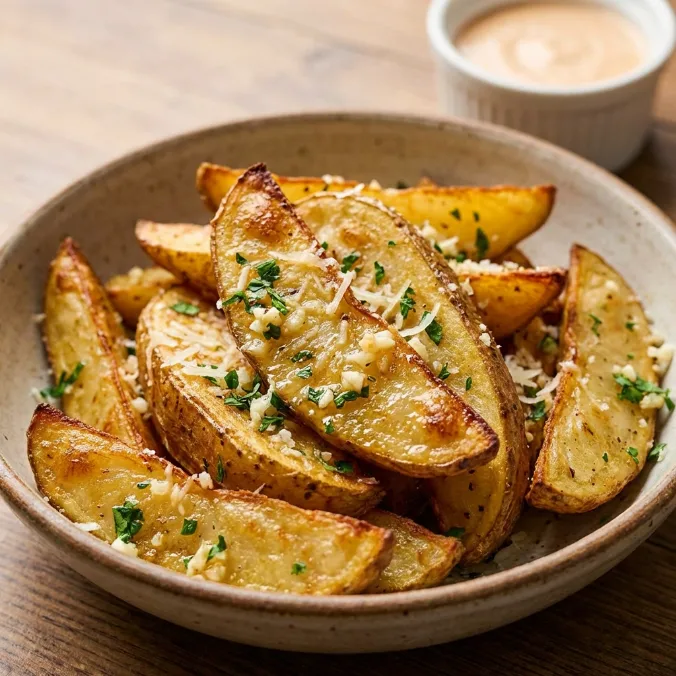
Serving These Wedges
These wedges are best served straight from the air fryer while the Parmesan crust is still at its crispiest. A shower of extra grated Parmesan over the top right before serving adds a salty, savory finish that is hard to argue with.
Set out a dipping sauce or two alongside them. Ranch dressing is a classic pairing that needs no explanation. Garlic aioli makes the garlic flavor even more pronounced in a very good way. A simple mix of ketchup and a little hot sauce works just as well for a more casual table. The wedges are assertive enough in flavor to stand on their own, but a good dipping sauce turns them into something interactive.
These make a natural companion for burgers, grilled chicken, or pork. They also hold their own as the main attraction of a relaxed snack plate for a Friday night when dinner does not need to be formal.
Storing and Reheating
Keep leftover wedges in an airtight container in the refrigerator. They are best eaten within a couple of days, and the sooner the better — the crust softens overnight as the moisture from the potato interior redistributes.
To reheat, the air fryer is your best option. A few minutes at 375°F brings back a good amount of the crispiness, especially on the edges. The microwave will warm them through but the texture suffers, so avoid it if you can.
Frequently Asked Questions
Why do you blanch the potatoes before air frying them?
The blanching step removes surface starch from the potatoes, and that starch is what causes the outside to stay soft and slightly gummy during cooking. By soaking the cut wedges in hot water for ten minutes before air frying, you give the surface a clean start that allows it to crisp up properly in the dry heat. It also gently begins the cooking process so the insides are soft and fluffy by the time the exterior is golden and crunchy. It looks like an extra step, but the difference in texture is noticeable.
Can I use a different type of potato?
Russet potatoes are genuinely the best choice for this recipe because their higher starch content produces that fluffy interior and crispy exterior. Waxy potatoes like red or Yukon Gold will hold their shape well but tend to stay firmer on the inside and do not crisp quite as dramatically on the outside. If russets are not available, Yukon Golds will still produce a delicious result — just expect a slightly different texture rather than the same fluffy-inside, crunchy-outside balance.
Do I need to peel the potatoes first?
Not at all. The skin-on approach is recommended here — it cuts down on prep time and the skin crisps up nicely in the air fryer, adding texture and a slightly earthy flavor that works well with the garlic and Parmesan. If you do prefer peeled wedges, simply peel the potatoes before cutting them into wedges. The recipe works both ways.
My garlic is burning before the wedges are done — what should I do?
This usually happens when the garlic is minced very finely and ends up directly on the outermost surface of the wedges with no buffer. Shaking the basket regularly during cooking, especially during the final five minutes at 400°F, helps redistribute the garlic so it does not stay in one spot too long. You can also try adding the garlic a few minutes into the cook time rather than before, the same way sliced garlic is added toward the end of the Brussels sprouts recipe, to prevent over-browning.
A Last Thought
There is something quietly satisfying about a recipe this honest. Four potatoes, a handful of staple ingredients, a blanch that takes ten minutes, and an air fryer that does the rest. The wedges come out looking and tasting like something you would order at a restaurant, and the kitchen stays calm the whole time.
That combination — effort that looks bigger than it is, results that taste exactly as good as you hoped — is what makes a recipe worth coming back to. Make them once on a regular weeknight and see if they do not start showing up on your table every week after that.
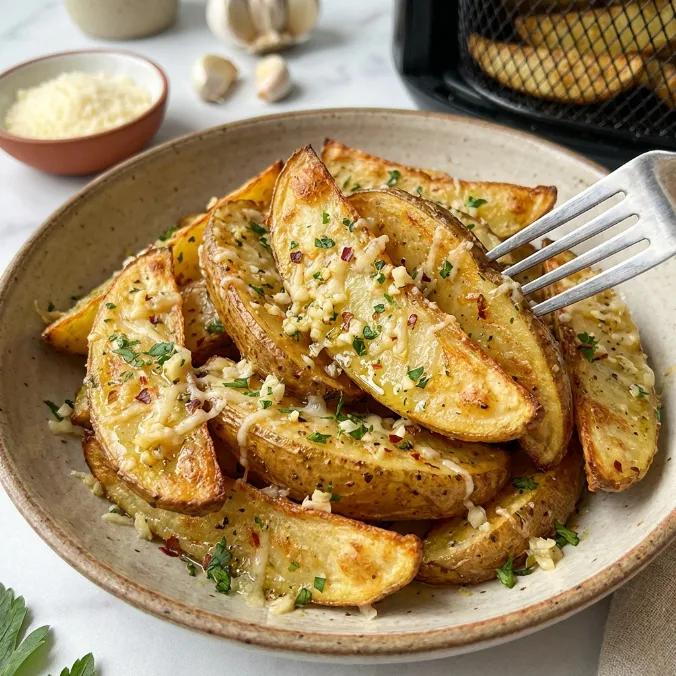

Air Fryer Garlic Parmesan Potato Wedges
Ingredients
Method
- Place a large pot of water over medium-high heat while you cut the potatoes into wedges lengthwise. Just before the water is boiling, remove it from the heat. Add the potatoes to the hot water and blanch them for 10 minutes.
- Drain the potatoes and place them on paper towels or a kitchen towel to drain. Once thoroughly dried, transfer the potatoes to a baking sheet.
- Preheat the air fryer to 360 degrees F.
- Pour the oil over the potatoes and toss they’re coated. Sprinkle with garlic, salt, pepper, and Parmesan. Toss to coat.
- Transfer the potato wedges to the air fryer basket. (Be sure not to overcrowd them. If needed work in batches for smaller air fryers.) Cook for 8 minutes at 360 degrees F.
- Shake the air fryer basket and then cook for 5 minutes at 400 degrees F to really crisp up the potatoes.
- When the cooking time is up the potatoes should be crispy and golden brown. Serve warm with extra Parmesan cheese sprinkled on top alongside your favorite dipping sauce.
Notes
Calories: 152kcal | Carbohydrates: 26g | Protein: 5g | Fat: 4g | Saturated Fat: 1g | Polyunsaturated Fat: 1g | Monounsaturated Fat: 2g | Cholesterol: 3mg | Sodium: 462mg | Potassium: 606mg | Fiber: 2g | Sugar: 1g | Vitamin A: 91IU | Vitamin C: 9mg | Calcium: 72mg | Iron: 1mg
