
Asparagus has the unfortunate habit of being treated as an afterthought — the vegetable you throw on the side of the plate because something green needed to be there. But cook it right, with a little garlic and lemon and the concentrated heat of an air fryer, and it becomes the thing people reach for first. Tender through the center, lightly crisped at the tips, bright with citrus, and deeply savory with two layers of garlic. This recipe does all of that in under 10 minutes.
A Simple Vegetable That Deserves More Credit
Asparagus has a flavor that is genuinely its own — earthy and slightly grassy, with a natural bitterness that becomes something almost sweet when it is cooked well. The problem is that most cooking methods either flatten that flavor entirely or never quite bring it forward the way it deserves.
Steaming keeps asparagus pale and a little soft, which is fine but forgettable. Boiling takes away more than it gives. Oven roasting gets closer — the dry heat coaxes out the caramelized edges and tender interior that make asparagus genuinely delicious — but it takes longer than a quick weeknight side should have to.
The air fryer closes that gap. It delivers the same dry, circulating heat as a hot oven in a fraction of the time, and the result is asparagus that tastes like it took considerably more effort than it actually did.
Why This Fits Into Any Weeknight
The appeal of this recipe is not just the flavor — it is how quietly it fits into an already moving evening. You are not standing over the stove, checking on anything, or managing multiple pans. You trim the ends, toss the spears in a bag with five other ingredients, shake everything together, and put them in the basket.
By the time you have plated everything else, the asparagus is done. That kind of reliability is what turns a recipe into a habit, and this one becomes a habit fast.
What Each Ingredient Brings to the Dish
The ingredient list here is short, but there is real thought behind each component. Olive oil gives the asparagus a coating that allows the surface to brown and the seasoning to adhere. Without it, the garlic and salt would not stick evenly, and the spears would dry out rather than caramelize.
Lemon juice does something no dry spice can — it adds acidity that cuts through the richness of the oil and lifts the natural flavor of the asparagus without covering it up. A tablespoon is enough to taste it in every bite without making the dish feel sour.
The garlic combination is worth noting. This recipe uses both minced garlic and garlic powder, and the reason is that they behave differently. Garlic powder distributes evenly across every spear and infuses the flavor throughout the coating. Minced garlic adds small concentrated pockets of deeper, more pungent garlic flavor that the powder alone cannot replicate. Together, they give the dish a layered garlic quality that tastes far more intentional than a single form of garlic ever could.
Salt ties everything together. About half a teaspoon is a good starting point, but taste your asparagus after seasoning and adjust — the thickness of the spears and personal preference both play into how much the dish needs.
What Happens Inside the Air Fryer
At 400°F, the air fryer pushes hot, dry air around every inch of the asparagus spears. That heat does two things simultaneously — it cooks the inside of the spear through gentle, even heat while the high-circulation environment dehydrates the surface just enough to create that slightly crispy, lightly browned exterior.
It is a similar effect to high-heat oven roasting, but faster and more consistent because the heat comes from all directions rather than from one heating element above or below. The tips, which are the most delicate part of the spear, catch color quickly and go slightly crisp. The thicker part of the stem stays tender without going soft. That contrast in texture within a single spear is what makes air fryer asparagus so satisfying to eat.
Getting the Cook Right
Start by trimming the woody bottoms off the asparagus — about two inches from the base. Those ends are fibrous and tough in a way that does not improve with cooking, and they do not absorb seasoning well. Snap or cut them off and discard them.
Place the trimmed spears in a zip-top bag or a large bowl along with the olive oil, lemon juice, minced garlic, garlic powder, and salt. If using a bag, seal it and shake well, turning the bag so every spear gets coated. If using a bowl, toss with tongs or your hands until everything is evenly covered.
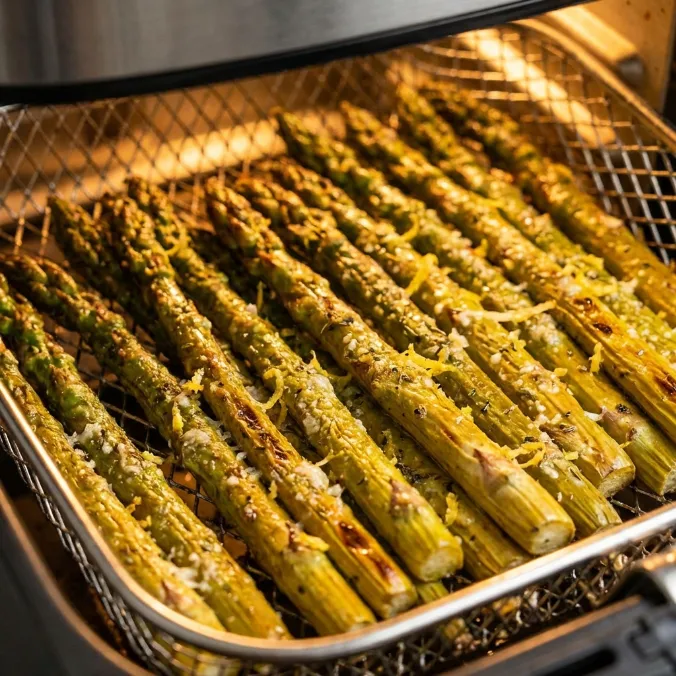
Lay the asparagus in the air fryer basket or tray in a single layer. Overlapping or stacking spears blocks airflow and causes them to steam rather than roast — the texture you are after depends on that circulation. For thin spears, set the air fryer to 400°F and cook for 5 to 6 minutes. For thicker spears, plan on 7 to 8 minutes. Flip the spears halfway through for even browning on both sides.
Remove them to a plate as soon as they are done. Asparagus continues to cook briefly from residual heat, and leaving them in the basket after the timer goes off will take them past the texture you want.
Reading Doneness Without Guessing
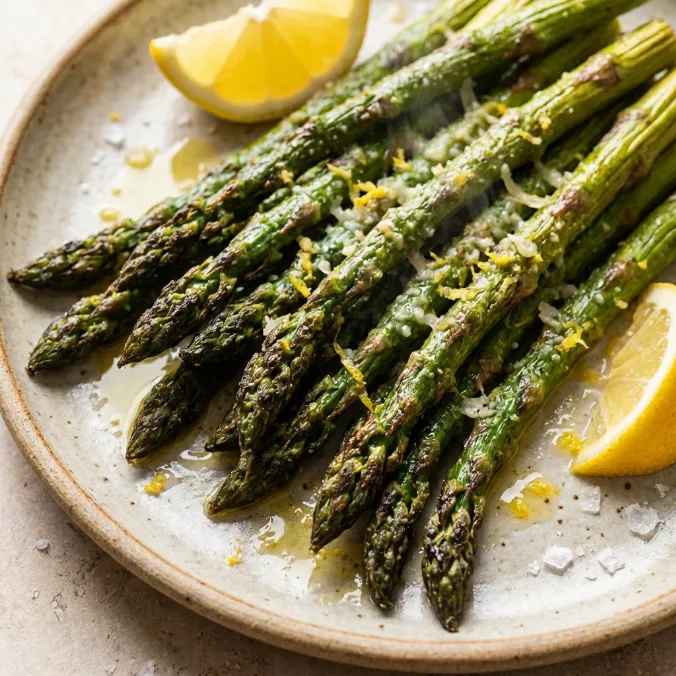
The easiest way to know when asparagus is done is to look at the tips. When they have gone from bright green to slightly darkened and have a visible crispiness at the very end, the spears are ready. The rest of the body should be a deeper, more saturated green than when it went in, with a few browned spots along the sides.
For those who prefer a little more texture and bite, pull the spears at the lower end of the time range. For softer, more fully cooked asparagus that yields easily, lean toward the higher end. There is no wrong answer — it comes down to what you like.
Adjusting for the Asparagus You Have
Thickness varies more in asparagus than in almost any other vegetable, and what you find at the store can change week to week depending on the season. Thin, pencil-width spears cook quickly and can go from perfect to overdone in under a minute. Thick spears — closer to the width of a finger — are heartier and take longer to cook through.
Both are genuinely good, just different. Thin spears have a more delicate texture and tend to crisp more dramatically at the tips. Thick spears stay meatier and have a more substantial bite. The cooking time difference between them is only a minute or two, so choose based on what looks fresh rather than what is most convenient for timing.
If your bunch includes a mix of sizes, pull the thinner spears first at around the 5-minute mark, let the thicker ones continue for another 2 minutes, and everything will come out at the same level of doneness.
Making It Your Own
The lemon-garlic profile here is a classic for good reason — it works with almost everything. But there is room to take this in a few different directions depending on your mood or what you are serving alongside it.
A light grating of Parmesan over the spears right as they come out of the basket adds a salty, nutty layer that melts slightly into the warm surface. A pinch of red pepper flakes tossed in with the other seasonings before cooking introduces a quiet heat that builds over the course of a few bites. A small drizzle of balsamic glaze after plating adds a sweet-acidic finish that makes the whole dish feel more elegant with almost no effort.
For a more herb-forward version, fresh thyme or rosemary added to the bag with the other seasonings before tossing gives the spears a fragrant, woodsy quality that works especially well alongside roasted meats.
What to Serve Alongside
Asparagus works beside almost anything, but it earns its best pairings with proteins that share its light, fresh character. Salmon is the natural companion — the richness of the fish and the brightness of the lemon-garlic asparagus complement each other in a way that feels complete. A simple pan-seared chicken breast, seasoned plainly and rested properly, is another pairing that lets the asparagus hold its own on the plate without getting overshadowed.
For a lighter meal, these spears over a bowl of grains — farro, quinoa, or a simple white rice — with a soft-cooked egg and a little extra lemon is a complete dinner that takes under 20 minutes from start to finish. It is the kind of meal that sounds minimal but tastes like genuine cooking.
Storing and Reheating Leftovers
Cooked asparagus keeps well in the refrigerator for three to four days in an airtight container. The texture softens a little after refrigerating, but the flavor stays strong. To reheat, the air fryer is again the best option — two to three minutes at 400°F is usually enough to warm the spears through and bring back some of their texture without overcooking them. Keep a close eye on them because they reheat much faster than they cooked initially.
The microwave also works if speed is the priority. Cover the asparagus with a damp paper towel and heat in 20 to 30-second bursts until warmed through. The texture will be softer than air fryer reheating, but the flavor holds up fine for a quick lunch or added to something like a grain bowl or an omelette.
Frequently Asked Questions
Do I need to preheat the air fryer before cooking asparagus?
Preheating is a good habit for most air fryer recipes, and asparagus is no exception. Starting the spears in a basket that is already at temperature means they hit immediate, consistent heat rather than gradually warming up, which helps the exterior crisp rather than slowly steam. A two to three minute preheat at 400°F before loading the basket makes a noticeable difference in the final texture.
Can I use bottled lemon juice instead of fresh?
Fresh lemon juice tastes brighter and has a more complex acidity than bottled, but bottled will work if that is what you have on hand. Use the same amount — one tablespoon — and the result will be close enough for most purposes. If you do use fresh, the zest from the lemon added to the bag along with the juice adds an extra layer of citrus flavor that is worth trying at least once.
What is the difference between using minced garlic and garlic powder?
They behave very differently in cooking. Garlic powder is fine and dry, so it distributes evenly across every spear and infuses the coating with a consistent garlic flavor throughout. Minced garlic, being wet and textured, clings in small pieces to the surface of the asparagus and creates deeper, more concentrated bursts of garlic flavor as you eat. Using both gives you an even base of garlic flavor with those small pockets of intensity — which is what makes this seasoning combination work so well.
How do I know when the asparagus is overcooked?
Overcooked asparagus turns from a deep, vibrant green to a dull, olive-grey-green and loses its firmness almost entirely. The spears will look limp rather than holding their shape, and the tips will be darkened and dry rather than just lightly crisped. If you catch it at the very edge of overdone, the flavor is still fine, just softer. The visual cue of that color change is the easiest way to know when you have gone a minute too long.
A Side Dish That Does Not Feel Like One
There is something satisfying about a vegetable that makes people go back for a second helping without being asked. Not because it was smothered in something or dressed up beyond recognition, but because it was cooked well and seasoned honestly.
That is what this asparagus does. It does not need to be the centerpiece of the meal to earn its place at the table. It just needs to be what it already is — bright, garlicky, slightly crisp, and ready in the time it takes to finish everything else.

Air Fryer Asparagus
Ingredients
Method
- Cut woody ends from asparagus (about 2 inches).
- Place asparagus in a zip-top bag or in a bowl and coat well with all ingredients.
- Place asparagus in air fryer in a single layer and set to “air fry” setting at 400° (F) for 5-6 minutes for thin asparagus; 7-8 minutes for thick asparagus.
- Remove to a plate and enjoy.
