
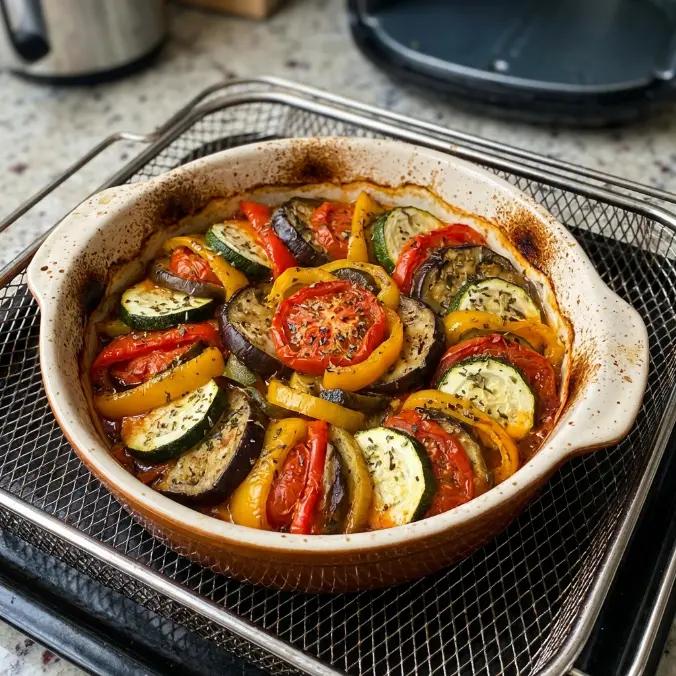
Ratatouille is one of those dishes that looks far more impressive than the effort it actually requires. Colorful rounds of eggplant, zucchini, yellow squash, and tomato arranged in a pan, roasted until tender and caramelized, finished with melted Parmesan — it is the kind of thing that makes people lean over and ask what you made before they have even sat down.
A Dish That Has Always Been About Simplicity
Ratatouille began as a French farmhouse dish, born from the practical necessity of using garden vegetables before they went past their prime. It was never complicated or expensive. It was honest food — whatever grew in abundance, sliced up, seasoned well, and cooked with care.
That origin story has always felt like the most honest thing about this dish. It does not need to be fussy to be beautiful. It does not need a long ingredient list to taste like something deeply satisfying. A handful of vegetables, a good olive oil, and a little patience with the arrangement is genuinely all it takes.
The air fryer honors that simplicity completely. No long oven preheat, no stirring, no checking on a simmering pot. Just the vegetables, the heat, and about fifteen minutes.
Why This Recipe Works for Real Life
The appeal here is not just the flavor — it is the ease that sits underneath the visual payoff. You slice, you season, you arrange, and the air fryer takes it from there. The whole dish comes together in well under half an hour, which is remarkable for something that looks like it required actual effort.
It also works in any season. Summer garden produce is the natural choice, and nothing beats it when eggplant and zucchini are at their peak. But good tomatoes, small zucchini, and yellow squash are available year-round in most grocery stores, which means this is a recipe you can reach for any time the week calls for something vegetable-forward and quietly lovely.
What Each Ingredient Brings to the Pan
The vegetable lineup here is classic and intentional. One small eggplant — about six inches long — sliced into quarter-inch rounds brings a dense, earthy richness that absorbs the olive oil and spices beautifully as it roasts. Two small green zucchini and two small yellow squash add mild sweetness and a softer texture that contrasts gently with the firmer eggplant. Two medium tomatoes provide juiciness and acidity that keeps the whole dish feeling alive rather than heavy.
Half a cup of diced yellow onion and a tablespoon of minced garlic form the base layer underneath all the vegetables. As the dish cooks, that layer softens and melds into the bottom of the pan, releasing deep savory flavor that rises up through everything sitting on top of it.
The spice mixture is where the dish gets its aromatic character: three tablespoons of extra-virgin olive oil, a teaspoon and a half of salt, half a teaspoon of black pepper, a teaspoon of dried oregano, and two teaspoons of dried basil. It is a Southern French flavor profile — herby, warm, and deeply fragrant when it meets hot air.
The Arrangement: Why It Matters More Than You Think
The way the vegetables are placed in the pan is not just for appearance, though the appearance is genuinely beautiful. Standing the slices on their edges and overlapping them in alternating colors — eggplant, zucchini, yellow squash, tomato, repeat — ensures even exposure to the circulating heat of the air fryer. Flat vegetables laid in a single pile would steam against each other; standing them upright allows air to move between each slice.
Start around the outer edge of the pan and work inward in concentric rings toward the center. Fill every gap you can find. If your slices outnumber the space, press them in firmly — they will settle and shrink slightly as they cook. The goal is a tight, colorful mosaic that roasts evenly and looks like you arranged it with great care, even though it takes only a few minutes once you get the rhythm of it.
The onion and garlic go down first, spread across the bottom of a greased oven-proof dish or pan that fits inside your air fryer basket. Every bite of vegetable that sits above that base will carry some of that garlic-and-onion depth.
Handling the Vegetables Gently
The sliced tomatoes in particular need a light touch. Once they are coated in the olive oil and spice mixture, they become soft and fragile — more delicate than the eggplant or squash rounds. When you toss the vegetables to coat them, do it gently and slowly. A rough toss will leave you with broken tomato slices that are harder to arrange neatly and that release their juice too early.
The quarter-inch thickness is worth measuring at least loosely. Slices that are noticeably thicker will take longer to cook through, and slices that are too thin may dry out before the eggplant and squash are done. Keeping everything roughly uniform is what allows the whole pan to finish at the same time.
In the Air Fryer: What to Expect
Preheat to 400°F before the pan goes in. Cook for fifteen to twenty minutes total, but check the vegetables at the ten-to-twelve-minute mark. This checkpoint is important — air fryer models vary more than people realize, and a pan full of quarter-inch vegetables can move from perfectly roasted to overdone in just a minute or two. At the ten-minute mark, the vegetables should be softened and beginning to brown at the edges. By fifteen minutes, they should be well-roasted, caramelized at the tips, and tender all the way through.
What you are looking for is visible browning on the tops of the slices — a deeper color than when they went in, with slightly crisped edges and a soft, yielding texture when you press one gently. The tomatoes will collapse slightly and look jammy. The eggplant will look almost silky. The squash will have gentle golden edges.
Do not be tempted to shake or stir the pan mid-cook. Unlike loose vegetables in a basket, this is a composed dish in a fixed pan. Let it be.
The Parmesan Finish
This is one of those small finishing moves that elevates a dish from good to genuinely memorable. When the ratatouille is done, pull the basket out, scatter freshly grated Parmesan generously over the top of the hot vegetables, then slide the pan back into the air fryer without turning it back on. The residual heat inside the appliance — easily 350°F or more just after cooking — melts the cheese in about a minute without browning it further.
The result is a thin, savory layer of melted Parmesan resting over the roasted vegetables, adding a salty, nutty richness that ties all the flavors together. It is an effortless touch that makes the finished dish look and taste restaurant-quality.
What Pan to Use
The pan or casserole dish you choose must meet two requirements: it needs to be oven-proof, and it needs to fit inside your air fryer basket with enough clearance for the lid to close. Most round cake pans, small gratin dishes, or air fryer-specific insert pans work well for this. A six-inch round pan fits most standard basket-style air fryers comfortably.
If you are unsure whether your dish will fit, measure the interior of your basket before you start prepping — there is nothing more frustrating than a beautifully arranged ratatouille that cannot actually get into the air fryer.
Spray the bottom and sides with non-stick spray before adding the onion and garlic base. The tomatoes especially will release juice during cooking, and a well-greased pan makes cleanup dramatically easier.
Variations Worth Exploring
The core recipe is a complete thought on its own, but it also welcomes personal touches. A pinch of red pepper flakes in the spice mixture adds a gentle warmth that works particularly well with the eggplant. A few sprigs of fresh thyme tucked between the vegetable slices before cooking adds a floral, slightly woodsy note that feels very classically French.
If Parmesan is not what you are reaching for, a light crumble of goat cheese over the finished dish melts similarly in the residual heat and adds a tangy creaminess that pairs beautifully with the roasted tomatoes. A drizzle of good quality balsamic glaze at the very end — post-Parmesan, right before serving — adds a sweet-acidic finish that makes the whole thing feel a little more elegant.
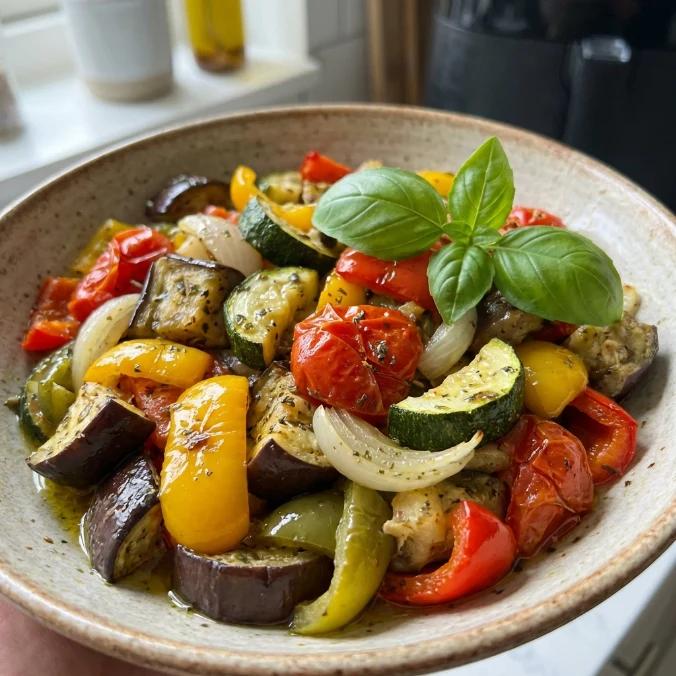
Fresh basil torn over the top just before it hits the table adds color and a summery freshness that dried basil in the spice mixture cannot quite replicate.
Serving This Dish
Ratatouille is genuinely versatile at the table. It works beautifully as a side alongside roasted chicken, grilled fish, or a simple pasta. Serve it with crusty bread and a glass of something cold and it becomes a light, satisfying vegetarian main all on its own.
It also makes a lovely topping for polenta or spooned over a thick slice of toasted sourdough rubbed with garlic. The roasted vegetables, with all their herb-infused olive oil, need very little else to complete a meal.
Serve it hot, straight from the pan, while the Parmesan is still soft and the vegetables are at their most fragrant.
Storing and Reheating
Leftovers keep well in an airtight container in the refrigerator for up to three days. The vegetables will continue to soften overnight as the residual moisture redistributes, but the flavor actually deepens — many people find leftover ratatouille more intensely flavored the next day than it was fresh.
Reheat gently in the air fryer at 350°F for a few minutes, or in a small pan on the stovetop over low heat. The microwave works in a pinch, though the vegetables will become softer still. Cold ratatouille straight from the refrigerator is also surprisingly pleasant as a topping for grain bowls or spread on toast — do not overlook that option
Frequently Asked Questions
Do I need a special pan to make ratatouille in the air fryer?
Not a special one, just the right size. Any oven-proof pan — a small round cake pan, a gratin dish, or an air fryer insert pan — works well as long as it fits inside your basket with the lid closed. Measure your basket interior before you start. Most standard basket-style air fryers accommodate a six-inch round pan comfortably. Spray it well with non-stick spray before you add anything, since the tomatoes release juice during cooking and can stick without it.
Can I use different vegetables in this recipe?
The core four — eggplant, zucchini, yellow squash, and tomato — are traditional for a reason, and their textures and cook times are well-matched. That said, thin rounds of bell pepper can be worked in between the other slices and roast beautifully. Mushroom rounds are another option, though they release more moisture and may affect how the other vegetables cook around them. Whatever you add, keep the slices at a consistent quarter-inch thickness so everything finishes at the same time.
How do I know when the ratatouille is done?
Look for well-browned, slightly crisped edges on the tops of the vegetable slices — particularly the eggplant and squash rounds. The tomatoes will look collapsed and jammy. Press one of the eggplant slices gently; it should give way without any resistance. If the vegetables look pale and feel firm, give them another two to three minutes and check again. The ten-to-twelve-minute visual check is important because air fryer temperatures vary enough between models that the difference between done and overdone can be a short window.
Can I make this without Parmesan?
Absolutely. The Parmesan finish is optional and the ratatouille is fully delicious without it. If you are keeping the dish vegan, simply skip the cheese entirely and finish instead with a drizzle of extra olive oil and a little fresh basil. Nutritional yeast scattered over the hot vegetables gives a faintly cheesy, nutty quality for a dairy-free alternative that still adds a finishing layer of flavor.
A Last Thought
There is something quietly meditative about arranging ratatouille. Standing each vegetable slice on its edge, alternating colors, working from the outside in — it is unhurried in the best possible way, and the five minutes it takes to arrange the pan properly is part of what makes pulling it out of the air fryer feel rewarding. The dish looks like care went into it because a little did.
Make it on an evening when the kitchen feels calm and you want something beautiful on the table without a lot of fuss. That is exactly the mood this dish was born from.

Ingredients
Method
- Trim ends off eggplant, zucchini, yellow squash and tomatoes. Slice them into rounds approx. ¼” thick. Place sliced vegetable in a large bowl.
- In a separate small bowl, stir olive oil, salt, pepper, oregano and basil until combined. Pour onto the sliced veggies. GENTLY toss veggies until they’re well-covered. Set bowl aside.
- The casserole dish/pan you use must be oven-proof and fit easily inside the basket of the air fryer. Spray the bottom and sides with non-stick spray. In a small bowl, combine diced onion and minced garlic; spread evenly on the bottom of the greased pan.
- Arrange sliced vegetables in the pan (on TOP of the onions and garlic). Stand the veggie slices on end, overlapping/alternating veggies (and colors). Start around the edges of the pan; work into the center to create a colorful looking ratatouille.
- Preheat air fryer to 400°F. (200°C.). Once heated, place ratatouille into the basket of the air fryer. Cook at 400°F. for 15-20 minutes until fully roasted. IMPORTANT TIP: Check on the veggies around the 10–12-minute mark to ensure they don’t overcook. The size of vegetable slices used, and varying temperatures of air fryers can lead to differing results, so please keep an eye on the vegetables! When ratatouille is done, veggies should be well-browned and tender.
- Once done, pull basket out of air fryer. Garnish veggies immediately with finely grated Parmesan (while veggies are hot). Put ratatouille back in the air fryer, but DON’T COOK IT ANYMORE. Residual heat remaining in the air fryer will melt the Parmesan cheese (about 1 minute). Once cheese melts, remove and serve the ratatouille while hot. Enjoy!
