
Weeknight dinners have a way of sneaking up on you. One minute it’s 5:30, and the next it’s 6:45 and you’re still staring at the fridge. That’s exactly the kind of evening this recipe was made for.
Four salmon fillets, a handful of pantry spices, and less than ten minutes in the air fryer. That’s the whole story. What comes out is salmon with lightly crisped edges, a tender flaky center, and a seasoning that somehow tastes like you put in a lot more effort than you actually did.
Where This Recipe Fits In
The first time salmon went into the air fryer instead of the pan, it felt a little uncertain. Salmon on the stovetop is one of those things that works fine but never feels entirely relaxed — the oil splatter, the timing, the smoke. The air fryer removed all of that.
Now it’s the default. No oil popping across the stove. No smoke alarm making a guest appearance. Just seasoned fillets going in, a timer set, and dinner showing up on the table without a fuss. It’s the kind of method that turns salmon from a “special occasion” protein into something you genuinely cook on a random Wednesday.
Salmon has this quality that makes it ideal for weeknights. It’s rich enough to feel satisfying without needing much added to it, and it pairs with almost anything already in the kitchen — a bowl of rice, a handful of greens, some roasted vegetables. The air fryer makes it fast enough that none of that feels like a stretch.
The Seasoning and Why It Works
This recipe keeps the seasoning honest. Garlic powder, paprika, salt, and black pepper — nothing unusual, nothing that requires a trip to a specialty store. But the combination lands well on salmon because it works with the natural richness of the fish rather than trying to cover it up.
The paprika brings a warmth and a beautiful reddish color that develops nicely in the heat. Garlic powder (not fresh garlic — more on that in a moment) gives the fillets a savory depth without the bitterness that comes from minced garlic burning under high heat. Salt and pepper do their steady, essential work. The olive oil ties everything together, helps the seasoning cling to the surface, and encourages that lightly golden exterior that makes each bite feel considered.
Lemon wedges on the side aren’t just garnish. A squeeze right before eating brightens the whole plate and cuts through the natural fat in the salmon in a way that makes everything taste a little more alive.
What the Air Fryer Does Differently
Pan-searing salmon gives you a nice crust on one side. Baking it gives you something softer throughout. The air fryer lands somewhere between both — circulating hot air from all directions at once, which means the outside gets that slight texture while the inside stays moist and gently flaky.
It also means no flipping required, no standing at the stove watching the edges, and no residual mess to clean up afterward. For a protein as naturally good as salmon, the air fryer’s job is really just to get out of the way and let it cook properly. That’s exactly what it does.
Making It at Home
Ingredients
- 4 (6-ounce) salmon fillets
- 1 tablespoon olive oil
- 1 teaspoon garlic powder
- 1/2 teaspoon paprika
- 1/2 teaspoon salt
- 1/2 teaspoon black pepper
- Lemon wedges for serving
- Tartar sauce for serving
Instructions
- Preheat the air fryer to 400°F.
- Rub each fillet with olive oil, then season evenly with garlic powder, paprika, salt, and black pepper.
- Place the salmon in the air fryer basket and cook for 7 to 9 minutes, depending on the thickness of each fillet. Keep in mind that timing can vary between different air fryer models.
- Open the basket and check doneness by pressing a fork gently into the thickest part. The salmon should flake apart without resistance. If it needs more time, return it for 1 to 2 additional minutes.
- Serve with lemon wedges and tartar sauce on the side.
Tips That Make the Difference
Use garlic powder, not fresh garlic. This one matters more than it might seem. Fresh minced garlic burns quickly at 400°F, and burnt garlic has a sharp, acrid flavor that doesn’t belong on fish. Garlic powder distributes evenly across the surface and toasts gently without turning bitter.
Make sure the fillets are similar in thickness. When one piece is half an inch thicker than another, they finish at completely different times. Matching fillets as closely as possible means everything comes out right at the same time. If you have mixed thicknesses, cook the thicker ones together as a separate batch.
Don’t skip the preheat. A cold basket means the salmon starts cooking slowly from room temperature, and the texture suffers for it. A preheated air fryer gives the fillets immediate, consistent heat from the moment they go in — which is part of what creates that slightly crisp edge.
Give the fillets room. If the pieces are pressed up against each other, moisture gets trapped between them and the skin never has a chance to firm up. Spread them out, or cook in two batches if the basket is on the smaller side.
Common Mistakes and How to Avoid Them
Overcooking salmon is the most frequent issue, and it usually happens because home cooks are used to checking by color alone. Salmon can look opaque and finished on the outside while still being perfect inside — but a minute or two past that point and it starts to dry out. Trust the fork more than the color. If it flakes without effort and the center isn’t translucent, it’s done.
The second thing worth watching is skipping the preheat in the interest of saving time. It feels like a shortcut, but it usually costs you the texture that makes this method worth using in the first place. Three minutes of preheating is a small trade for noticeably better salmon.
Ways to Change It Up
The base recipe here is deliberately neutral, which makes it easy to adjust for any direction you want to go.
For a smokier, bolder flavor, swap the regular paprika for smoked paprika. The depth it adds is significant without changing anything else about the recipe. If you want a little heat, a pinch of cayenne in the spice mix does the job without overwhelming the fish.
For an herby variation, add a half teaspoon of dried oregano or dill to the spice blend before rubbing. Dill especially is a classic salmon pairing that works beautifully with lemon on the side.
If you want to use a glaze — honey mustard, teriyaki, or something similar — hold off until the last two minutes of cooking. Glazes added at the start tend to burn under the high heat before the fish is actually done. Brushing it on near the end lets it caramelize lightly without scorching.
Air Fryer Size and Model Notes
Basket-style air fryers work well here because the salmon sits directly under the heating element and gets even exposure on all sides. If you’re using an oven-style air fryer, add a minute or two and check early — the heat distribution is a little different.
For smaller models in the 3 to 4 quart range, cook two fillets at a time to keep the spacing right. Larger models can usually handle all four in a single batch, which makes the whole process even faster.
How to Serve It
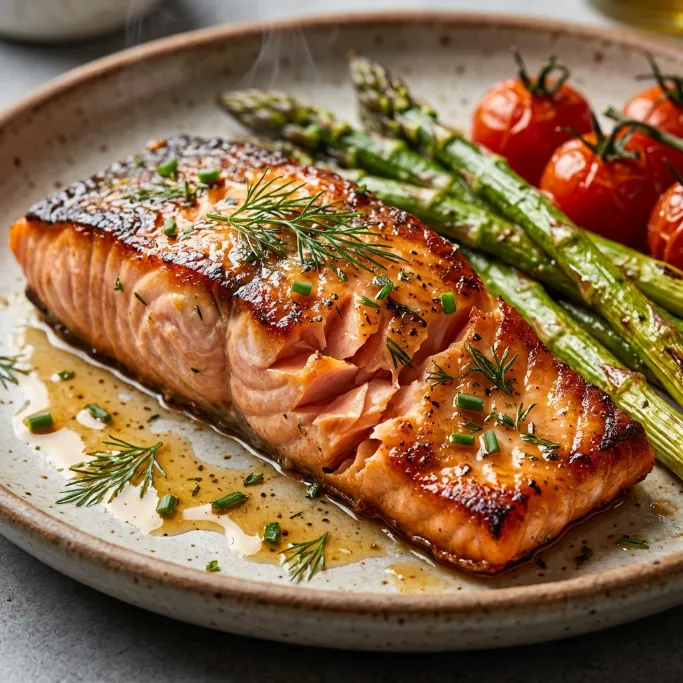
On a weeknight, this salmon is great alongside white rice and something simple and green — steamed broccoli, sautéed green beans, or a quick salad. The clean seasoning profile means it doesn’t compete with much.
If you’re leaning toward something lighter, flake the salmon over a grain bowl with whatever grains are already cooked — farro, barley, or quinoa all work — and add a drizzle of lemon juice over the top. It also tucks nicely into tacos with a little cabbage slaw and a creamy sauce.
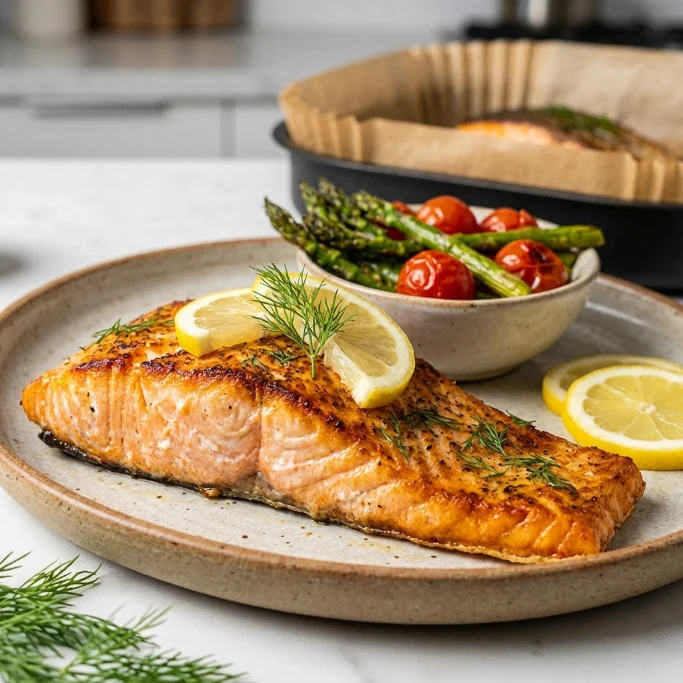
For a slightly more relaxed weekend meal, serve the fillets whole with a wedge of lemon and a bowl of tartar sauce. It’s the kind of plate that feels unhurried even when it took under ten minutes to make.
Storing and Reheating
Store leftover salmon in an airtight container in the refrigerator for up to three days. To freeze, place the cooled fillets in an airtight container or freezer bag and store for up to three months. Thaw overnight in the fridge before reheating.
For reheating, the air fryer works well at 350°F for about 2 to 3 minutes. It won’t be quite as fresh as the day it was made, but it comes back nicely — much better than the microwave, which tends to make the texture rubbery and sometimes leaves the center cold. If you’re using leftover salmon in a salad or bowl at room temperature, you can skip reheating entirely and it holds up just fine.
FAQ
Can I cook frozen salmon fillets directly in the air fryer?
It’s best to thaw the fillets first. Cooking from frozen changes the timing significantly and makes it harder to get even doneness throughout the fillet. The outside can overcook before the center fully comes through. Thawing overnight in the fridge is the easiest approach — by the time dinner rolls around the next day, they’re ready to season and cook.
Should the skin side go up or down in the basket?
Skin side down is the way to go. It protects the flesh from the direct heat at the bottom of the basket and helps the skin firm up slightly during cooking. The result is salmon that holds its shape better and releases from the basket more cleanly.
How do I know when the salmon is done without a thermometer?
The fork test is your most reliable option. Press gently into the thickest part of the fillet — if it separates into those natural flaky layers without any resistance, it’s ready. If it still feels slightly firm and the inside looks translucent, give it another minute. The center should look opaque but still appear moist, not dry or chalky.
Does the type of salmon affect the cooking time?
Yes, noticeably so. Thicker cuts like king or sockeye salmon may need the full 9 minutes or slightly beyond. Thinner Atlantic or farm-raised fillets often finish closer to 7 minutes. When in doubt, start checking at 7 minutes and go from there rather than committing to a single time and walking away.
A Closing Thought
There are meals you make because you have to, and then there are meals that quietly become something you look forward to. Air fryer salmon has a way of drifting into that second category without making a big announcement about it. You cook it once, it takes ten minutes, and it turns out better than expected. And the next week, without really deciding to, you find yourself reaching for salmon again.

Air Fryer Salmon
Ingredients
Equipment
Method
- Preheat the air fryer to 400°F.
- Rub each fillet with olive oil and season with garlic powder, paprika, salt and pepper. Place the salmon in the air fryer and air fry for 7-9 minutes, depending on the thickness of the salmon. Please note, time may vary between air fryers.
- Open the basket and check for desired doneness with a fork. You can return the salmon for another 1 or 2 minutes as necessary.
Notes
Serving: 1fillet | Calories: 276kcal | Carbohydrates: 1g | Protein: 34g | Fat: 14g | Saturated Fat: 2g | Polyunsaturated Fat: 5g | Monounsaturated Fat: 6g | Cholesterol: 94mg | Sodium: 366mg | Potassium: 852mg | Fiber: 0.2g | Sugar: 0.05g | Vitamin A: 193IU | Vitamin C: 0.01mg | Calcium: 23mg | Iron: 2mg
